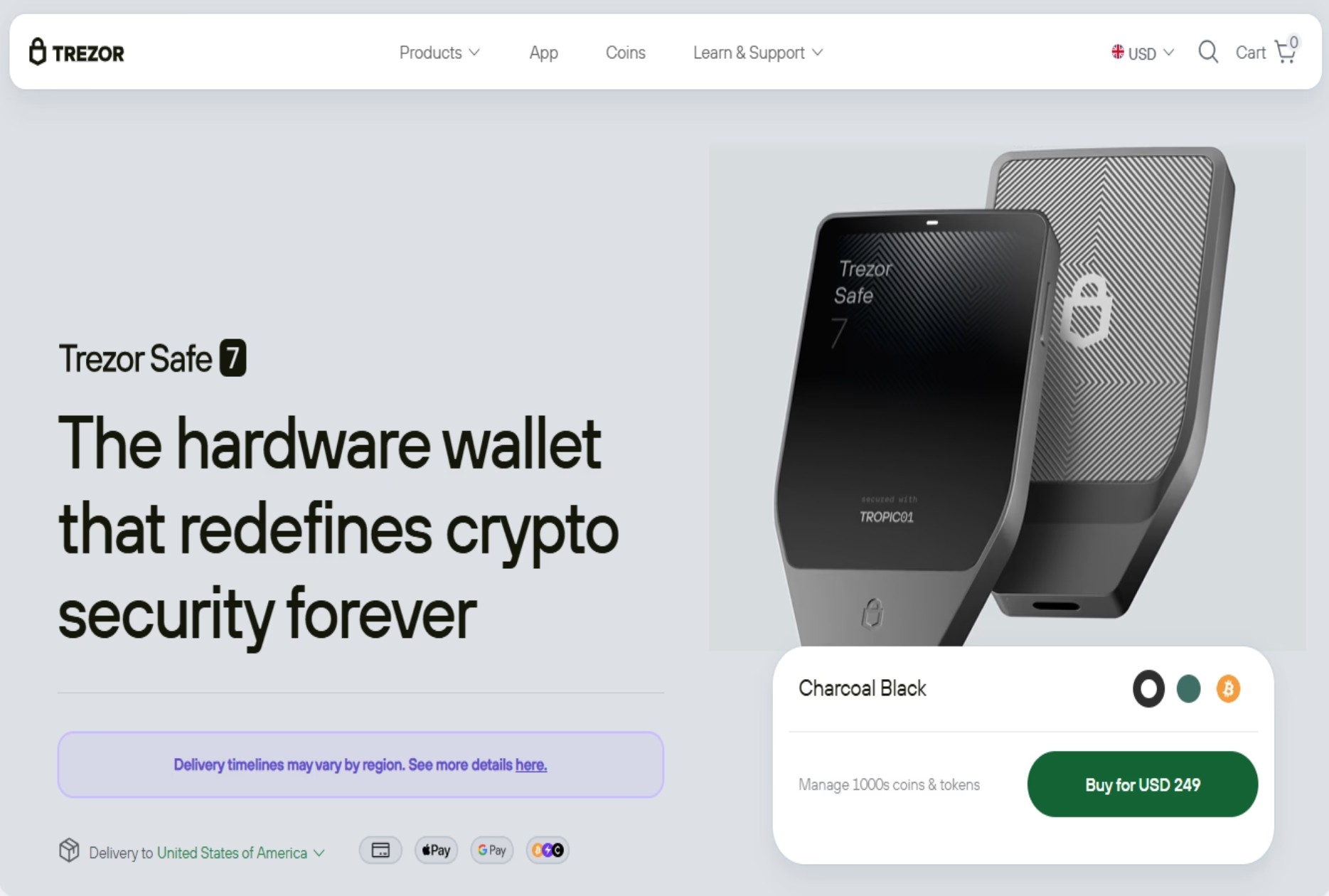
Architecting Security: A Technical Analysis of Trezor Bridge and Official Initialization Protocols
The transition to institutional-grade digital asset custody in 2026 has been marked by a significant shift toward self-sovereign security architectures. As global markets increasingly prioritize transparency and decentralization, the hardware wallet remains the quintessential tool for individual and corporate risk management. Within the SatoshiLabs ecosystem, two components serve as the critical infrastructure for secure operation: the Trezor Bridge and the Trezor.io/start initialization portal.
Understanding the technical synergy between these elements is not merely an exercise in operational efficiency but a requirement for maintaining the integrity of private key isolation in a volatile cyber-threat landscape. This analysis explores the cryptographic and procedural foundations that allow users to interact with decentralized networks without exposing their sensitive data to internet-connected vulnerabilities.
1. Technical Architecture: The Role of Trezor Bridge and Secure Initialization
At the heart of the hardware-to-software communication layer lies a sophisticated set of protocols designed to prevent unauthorized access to sensitive cryptographic material.
What is Trezor Bridge?
Historically, hardware wallets relied on browser plugins to facilitate communication. However, as web standards evolved and support for certain legacy plugins was deprecated, a more robust and secure solution was required. Trezor Bridge is a lightweight, local communication service that acts as a secure intermediary between a Trezor hardware wallet and supported web browsers or applications.
Operating as a background process (daemon), the bridge handles the low-level USB communication. Its primary function is to translate commands from the high-level application interface—such as a web-based wallet or a decentralized application (dApp)—into a format the device’s firmware can interpret.
Security Architecture of the Communication Layer
The security model of Trezor Bridge is built on several key pillars:
Localhost Isolation: The bridge communicates exclusively over
127.0.0.1(localhost). This ensure that no external network requests can directly access the communication port, effectively creating a firewall between the device and the open internet.Encrypted Payloads: While the private keys never leave the device, the transaction data sent to the device for signing is encrypted to prevent local eavesdropping or "side-channel" attacks by malicious software residing on the host computer.
Origin Validation: The bridge includes logic to verify the origin of requests. It ensures that only sanctioned interfaces can send commands to the hardware, mitigating the risk of cross-site scripting (XSS) attacks designed to trick users into signing malicious payloads.
The Criticality of Trezor.io/start
Initialization is the most vulnerable phase of a hardware wallet's lifecycle. Navigating to Trezor.io/start is the industry-sanctioned method for establishing a Root of Trust. This portal serves several high-authority functions:
Authenticity Verification: It facilitates a cryptographic "handshake" to ensure the device has not been tampered with or replaced by a counterfeit during the supply chain process.
Firmware Integrity: Most devices ship with no firmware pre-installed for security reasons. Trezor.io/start provides the only verified channel for downloading the latest, digitally signed firmware directly from the developer's servers.
Entropy Generation: The setup process ensures that the 12, 18, or 24-word recovery seed is generated using high-quality entropy from both the device's secure element and the user's manual interactions, ensuring the phrase is truly random and unguessable.
2. The 2026 Crypto Environment: Security Trends and Market Risks
The current digital asset ecosystem is characterized by a "Dawn of the Institutional Era," where regulatory clarity from frameworks like MiCA in Europe and new federal oversight in the United States has driven record adoption. However, this growth has been mirrored by increasingly sophisticated attack vectors.
Modern Threat Vectors
In 2026, users face risks that extend beyond simple phishing. "Address poisoning" and "supply chain interceptions" are common. Furthermore, the rise of quantum-ready security research has forced manufacturers to implement post-quantum cryptographic standards in their newest hardware.
The volatility of the current market, while providing significant opportunity for traders, also creates a sense of urgency (FOMO) that attackers exploit. In high-volatility environments, users may be tempted to cut corners on security—such as skipping the verification of a transaction on the hardware screen or failing to update the Trezor Bridge service. The infrastructure provided by SatoshiLabs is specifically designed to enforce a "slow down" mechanism, requiring physical button presses to confirm every sensitive action.
3. Trading and Staking: Strategies for Active Portfolio Management
For the modern investor, a hardware wallet is no longer just a "passive vault" for long-term holding; it is an active financial tool.
Secure Transaction Validation through Trezor Bridge
Traders interacting with decentralized exchanges (DEXs) like Uniswap or Curve rely on Trezor Bridge to sign transactions seamlessly. The bridge allows the hardware device to "clear-sign" smart contract interactions.
Professional Tip: Active traders should always verify the "Contract Data" on the device's trusted display. Malicious dApps can alter the destination address in the browser, but the Trezor Bridge ensures the hardware receives the raw data for user inspection before any signature is applied.
Staking Practices within the Ecosystem
Staking has evolved into a cornerstone of yield generation in 2026. Through the Trezor Suite and its associated bridge, users can participate in Proof-of-Stake (PoS) networks such as Ethereum (ETH), Solana (SOL), and Cardano (ADA).
Non-Custodial Staking: Unlike exchange-based staking, which carries significant counterparty risk, staking through the Trezor ecosystem allows users to delegate their voting power to validators while keeping the underlying assets under their own private keys.
Risk Mitigation: The bridge facilitates the "lock" and "claim" functions of staking contracts. By using the official setup at Trezor.io/start, users ensure they are interacting with verified staking pools, reducing the risk of participating in fraudulent yield-farming schemes.
4. Cold Storage vs. Active Portfolio Management
A professional-grade security strategy involves a tiered approach to asset custody.
The Tiered Security Model
Cold Vault: The majority of assets (e.g., 90%) are held in "deep cold storage" using a hardware wallet with a passphrase-protected hidden wallet. These assets are rarely moved.
Operational Layer: A smaller portion of assets is used for active trading and staking. This layer utilizes Trezor Bridge for frequent interactions with DeFi protocols.
Hot Liquidity: Only minimal funds for immediate exchange transactions are kept in "hot" software wallets, which are then periodically swept into the hardware-protected accounts.
This separation of concerns ensures that even if an operational error occurs during an active trade, the core of the user's wealth remains untouched in the primary vault.
5. Frequently Asked Questions
Why does my browser say it can't find the Trezor Bridge?
In 2026, many users have migrated to the Trezor Suite desktop application, which includes the bridge functionality natively. However, if you are using a web-based wallet and encounter this error, it typically means the standalone service is not running. Ensure you have the latest version installed and that no firewall or VPN is blocking the local localhost port 21325.
Is Trezor.io/start safe to use on a public Wi-Fi network?
While the communication between the device and the website is encrypted, it is highly recommended to perform your initialization on a trusted, private network. Public networks are susceptible to DNS hijacking, which could potentially redirect you to a malicious clone of the setup page. Always verify the SSL certificate and the URL character by character.
Can I stake Ethereum directly through the Trezor Bridge interface?
Yes. The bridge allows the Trezor Suite (web or desktop) to interact with staking providers like Everstake or Lido. This allows you to earn rewards without ever exposing your private keys to a third party.
Does the bridge service collect my private data?
No. The service is designed with privacy in mind. It functions as a pass-through layer for cryptographic commands. It does not store your private keys, seed phrases, or transaction history.
What should I do if a website asks for my recovery seed via the bridge?
This is a critical red flag. The Trezor Bridge and the hardware wallet will never ask you to type your recovery seed phrase into a computer or a web browser. If you see a prompt asking for your seed, disconnect your device immediately and report the site to the official security team.
6. Conclusion: Maintaining the Sovereign Edge
In an era of institutionalized blockchain finance, the ability to maintain a secure, independent custody solution is the ultimate competitive advantage. By leveraging the technical robustness of the Trezor Bridge and adhering to the rigorous setup standards found at Trezor.io/start, investors protect themselves against both the technical failures of the past and the sophisticated threats of the future. The commitment to open-source transparency and physical confirmation remains the gold standard for anyone serious about their digital legacy in 2026.